YIWU, Nov. 6 — The Fifteenth Meeting of the China-Africa Think Tanks Forum opened on November 6 in Yiwu, Zhejiang Province. At the opening ceremony, Chinese and African scholars jointly released two major think tank documents: the Think Tank Action Declaration on China-Africa Cooperation to Advance Modernization in the Global South and the China-Africa Consensus on Mutual Learning Between Civilizations. The documents offer intellectual contributions to the Global South’s collective pursuit of modernization.
The opening ceremony featured addresses by Oumar Demba Ba, Chief Diplomatic Adviser to the Former President of Senegal; Balew Demissie, Senior Consultant at the Policy Studies Institute of Ethiopia; Liu Yuxi, Ambassador for the Affairs of the Forum on China-Africa Cooperation; Gao Yi, Secretary of the CPC Jinhua Municipal Committee; and Jiang Yunliang, Secretary of the CPC Committee of Zhejiang Normal University. Qiu Limin, President of Zhejiang Normal University, presided over the ceremony.
Also in attendance were Teshome Toga Chanaka, former Ambassador of Ethiopia to China; Rafaravavitafika Rasata, former Minister of Foreign Affairs of Madagascar; Ye Bangrui, Secretary of the CPC Yiwu Municipal Committee; Chen Jiangfeng, Deputy Director-General of the Foreign Affairs Office of Zhejiang Province; Chen Xianchun, former Vice Chairman of the Zhejiang Provincial Federation of Social Sciences (at deputy director-general level); Xu Bu, Member of the United Nations Secretary-General’s High-Level Advisory Board and the Ministry of Education’s Strategic Advisory Committee for Building an Independent Knowledge System for Philosophy and Social Sciences in Universities; and Liu Hongwu, Director of the Institute of African Studies at Zhejiang Normal University.
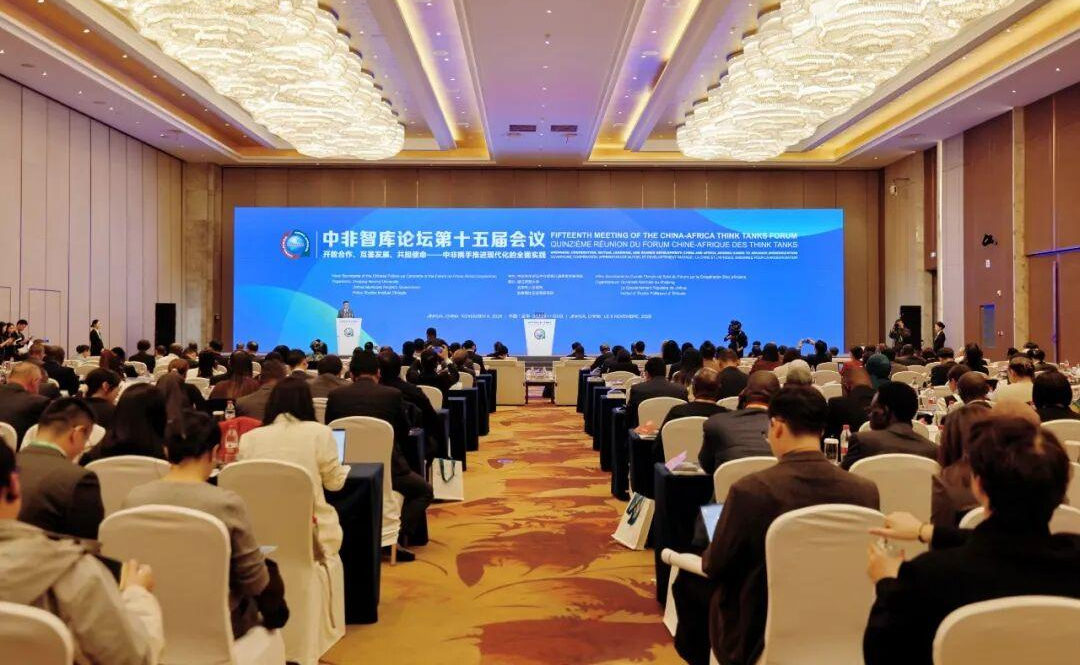 The opening ceremony of the Fifteenth Meeting of the China-Africa Think Tanks Forum in Yiwu, Zhejiang Province, on November 6.
Ba: translating political consensus into tangible development gains
Oumar Demba Ba said that exchanges between Africa and China have a long history, and that the two sides have always moved forward together in a spirit of peace and mutual respect. Against the backdrop of rising unilateralism and trade protectionism, he praised China’s historic decision to grant zero-tariff treatment to African countries with which it has diplomatic relations. He said that Africa and China should implement the Four Major Global Initiatives proposed by President Xi Jinping and make full use of mechanisms such as the Belt and Road Initiative and the Forum on China-Africa Cooperation to study the conditions for putting the zero-tariff arrangements into effect. This, he stressed, would help turn political consensus into tangible development outcomes. He also called on Africa to strengthen its own think tanks and develop an independent African narrative to challenge entrenched prejudices and take Africa-China cooperation to a higher level.
Addresses at the opening ceremony.
Demissie: no single model of modernization
Balew Demissie stressed that there is no one-size-fits-all model of modernization. Africa should therefore explore an independent development path in light of its own national conditions and the aspirations of Agenda 2063. Openness and mutual learning, he said, are essential to development. Africa and China should work together to build a knowledge system for a community with a shared future for mankind, moving beyond mutual understanding towards the joint creation of knowledge. In response to major trends such as artificial intelligence and digital transformation, cooperation should go beyond the application of technology. He called on think tanks on both sides to deepen collaboration in joint policy research, institutional partnerships, exchanges among young scholars and responses to emerging challenges, thereby giving developing countries a meaningful voice in global governance.
Liu Yuxi: zero-tariff measures drive 21.6% growth in imports from Africa
Liu Yuxi noted that this year marks the 70th anniversary of the establishment of diplomatic relations between China and African countries. Since the 2024 Beijing Summit of the Forum on China-Africa Cooperation, the two sides have worked together with stronger solidarity and coordination, delivered fruitful results in mutually beneficial cooperation and fostered new stories of friendship among their peoples, setting an inspiring example of South-South cooperation. China’s comprehensive zero-tariff measures for Africa have already delivered notable results: from May to September this year, China’s imports from African countries increased by 21.6 percent year on year. The measures not only benefit people’s livelihoods but are also expected to give fresh impetus to Africa’s industrialization. Liu called on Chinese and African think tank scholars to further explore the shared vision for advancing modernization, exchange experience in governance, provide intellectual support for high-quality China-Africa cooperation and serve as communicators of China-Africa friendship, helping build positive momentum in bilateral relations.
Gao Yi: Jinhua welcomes a new chapter in China-Africa dialogue
Gao Yi said that Jinhua is one of the Chinese cities with the closest economic, trade and people-to-people ties with Africa. The first meeting of the forum began in Jinhua, and the gathering in the city once again represents both a continuation of longstanding friendship and a new chapter in intellectual dialogue. As an important sub-forum under the framework of the Forum on China-Africa Cooperation, the China-Africa Think Tanks Forum, he said, should continue to follow the direction set by head-of-state diplomacy and carry forward the enduring spirit of China-Africa friendship and cooperation. Looking ahead, he called for the forum to explore a path of shared development, formulate solutions through extensive consultation, joint contribution and shared benefits, and deliver outcomes that serve the Global South. He expressed the hope that the forum would continue to act as a bridge of China-Africa friendship and a think tank pioneer in South-South cooperation, making greater contributions to the shared pursuit of modernization and the building of an all-weather China-Africa community with a shared future for the new era.
Jiang Yunliang: cooperation with institutions in more than 30 African countries
On behalf of Zhejiang Normal University, Jiang Yunliang extended his sincere gratitude to the leaders and friends from all sectors who have long supported the university’s development. He said that ZJNU has consistently made serving national strategies its mission, advanced its “International ZJNU” initiative and worked to build a bridge for China-Africa exchanges, cooperation and mutual learning between civilizations. The university has developed distinctive strengths in African area and country studies, high-level think tank development, the training of Africa-related professionals and people-to-people exchanges between China and Africa. It has established partnerships with higher education institutions in more than 30 African countries. Jiang expressed the hope that participants would use the forum as an opportunity to exchange views, build consensus and further deepen China-Africa think tank cooperation, contributing their insights to the full implementation of the outcomes of the Beijing Summit of the Forum on China-Africa Cooperation and to building consensus on modernization in the Global South.
Two think tank documents unveiled
At the ceremony, representatives of Zhejiang Normal University joined Chinese and international guests on stage to officially release the Think Tank Action Declaration on China-Africa Cooperation to Advance Modernization in the Global South. Focusing on the core substance of the “six modernizations” that China and Africa are pursuing together, the declaration calls on think tanks from both sides to serve as interpreters of independent development paths, advisers on exchanges of governance experience, practical contributors to deeper international cooperation for mutual benefit, and advocates of dialogue and mutual learning among world civilizations. The China-Africa Consensus on Mutual Learning Between Civilizations was released shortly afterwards. It calls for respect for the diversity of world civilizations, promotion of the common values of humanity, the preservation and innovation of civilizations, and deeper people-to-people exchanges and cooperation, thereby contributing to the development of global civilization.
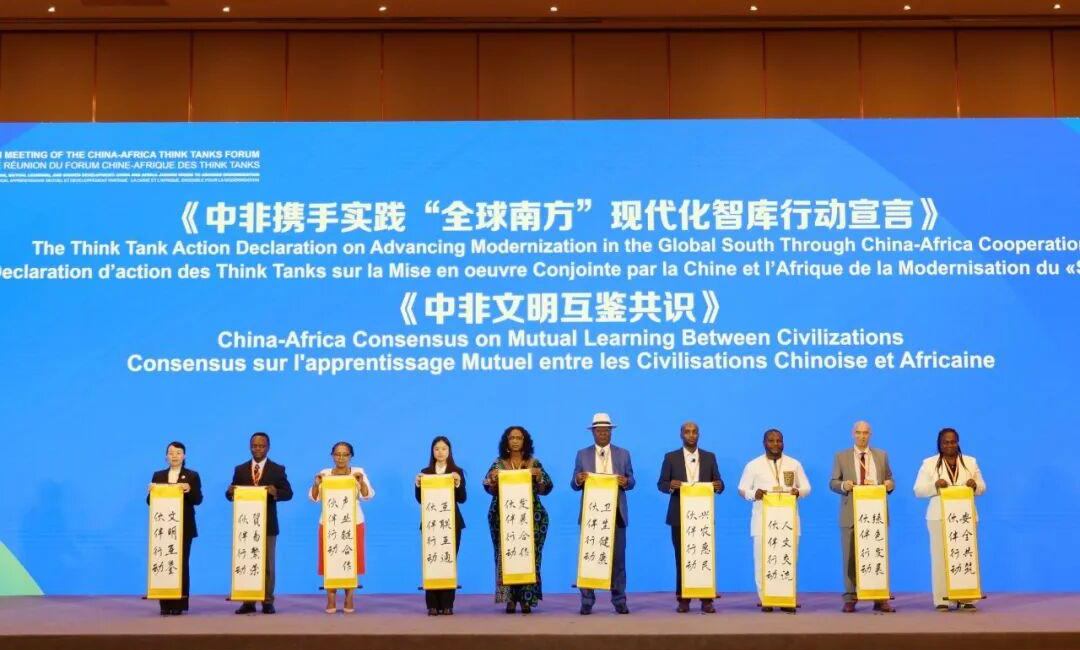
The two think tank documents are released at the opening ceremony.
Nine keynote speakers, three cooperation agreements and one exhibition
Zhang Jianzhen, Vice President of Zhejiang Normal University, chaired the first plenary session. Keynote speakers included Wang Wen, Director of the Chongyang Institute for Financial Studies and Dean of the School of Global Leadership at Renmin University of China; Teshome Toga Chanaka, former Speaker of the House of Peoples’ Representatives of Ethiopia and former Ambassador of Ethiopia to China; Han Dongyu, former Vice President and Professor of Northeast Normal University; Hugues Judicaël Mbadinga Madiya, President and Professor of the Prometheus Institute of Gabon; Yu Jia, Senior Operations Officer and Director of the Department of International Development Cooperation at Peking University’s Institute of New Structural Economics; Rafaravavitafika Rasata, former Minister of Foreign Affairs of Madagascar; Liu Hongwu, Director of the Institute of African Studies at Zhejiang Normal University; Attia Mahmoud Mohamed El-Tantawy, Director and Professor of the Institute of African Studies at Cairo University, Egypt; and Yoro Diallo, Senior Research Fellow at the Institute of African Studies of Zhejiang Normal University and recipient of the Chinese Government Friendship Award.
During the meeting, the Mapungubwe Institute for Strategic Reflection (MISTRA) of South Africa, the Prometheus Institute of Gabon and the Center for Public Economy of Omar Bongo University in Gabon are set to sign cooperation agreements with the Institute of African Studies at Zhejiang Normal University. An exhibition of Zhejiang Normal University’s achievements in African area and country studies is also on display, alongside the university’s research findings on key countries, important fields and major topics.
Publications on display at the Achievements Exhibition of African Region and Country Studies at Zhejiang Normal University.
About the 15th meeting
The meeting is held under the theme “Openness, Cooperation, Mutual Learning and Shared Development: China and Africa Joining Hands to Advance Modernization”. The two-day programme includes an opening ceremony, two plenary sessions, four parallel forums and a closing ceremony. Around 300 participants from China and African countries — including government officials, think tank scholars, journal editors, journalists, business representatives, and university faculty and students — are expected to take part. They will hold in-depth discussions on four topics, including advancing comprehensive zero-tariff arrangements and building a new framework for China-Africa industrial and supply chain cooperation, as well as implementing the Four Major Global Initiatives and promoting joint China-Africa efforts to advance modernization.

Leave A Comment
You must be logged in to post a comment.