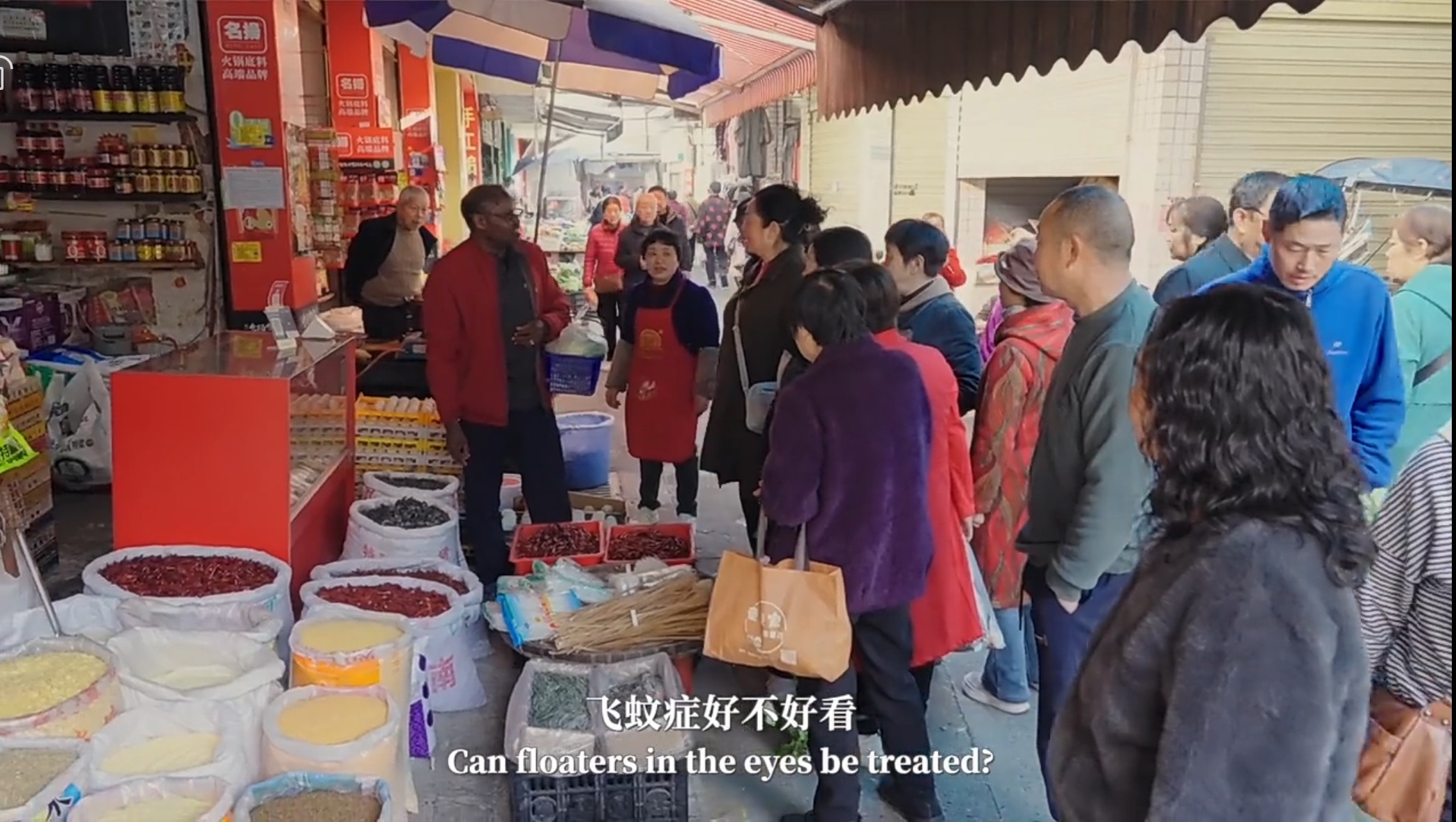
In 1984, a young doctor from Mali named Diarra Boubacar arrived in China on a scholarship. More than four decades later, he has never left. Today, he speaks fluent Sichuan dialect, haggles for vegetables at local markets like any other resident, and practices traditional Chinese medicine (TCM) across three Chinese provinces (i.e., Sichuan, Yunnan and Guangdong). He holds the distinction of being the world's first foreign-born PhD holder in Chinese medicine; a feat that remains unparalleled to this day.
Dr. Diarra grew up in a medical family in Mali. His grandfather was a traditional herbalist, and his father ran one of the country's leading hospitals; a facility that once served as a base for China's first medical aid team to Mali. Medicine, it seemed, was in his blood.
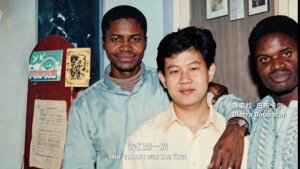
The Young Man Chasing His Dream (Right).
After a year and a half of intensive Chinese language training, he enrolled at Guangzhou University of Chinese Medicine. However, the road was far from smooth. Most of his lecturers taught in Cantonese, and he struggled to understand even basic instructions. To make matters worse, he had to grapple with classical Chinese; the ancient language in which many TCM classics are written.
"I had never experienced failure before because I had always been among the top students," Dr. Diarra recalls. He failed his first exam. But failure, rather than discouraging him, became a catalyst. He and his fellow international students purchased every reference book they could find. Of the six international students who began the program with him, only he and one other persisted until graduation. "The more I studied TCM, the more fascinated I became by its profoundness," he reflects.
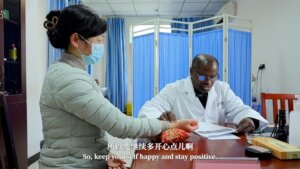
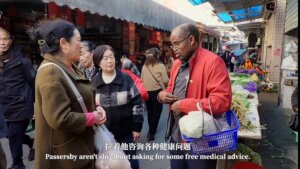
When he first opened his practice, not a single patient came for an entire week. Then a woman walked in, shocked to see an African doctor. He promised to treat her for free if it didn't work. She returned the next day with her mother and sister. That was the turning point. Today, thousands of patients seek him out annually across three provinces, and passersby stop him on the street for free medical advice, which he gladly offers.
His most enduring legacy, however, lies in the remote mountains of Yunnan Province. For over two decades, Dr. Diarra has ventured into communities with little to no access to healthcare, training village doctors. His wife, Yang Mei, recalls: "When our son was born, the village doctors had to take turns carrying our child. We had very little money then." Despite the hardships, his persistence paid off. Over 20 years, he has trained more than 3,000 village doctors, not just a number, but a movement.
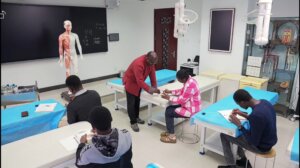
In 2019, Dr. Diarra championed the world's first Luban Workshop for Traditional Chinese Medicine in Mali. Fifty-four Malians have become certified TCM practitioners, and four more are currently in China for a three-year medical program, set to graduate in 2029. Why Africa? Because, as Dr. Diarra explains, traditional African medicine and TCM share profound commonalities; cupping, bloodletting, medicated baths, and manual therapies similar to Tuina. "In the future," he says, "mutual learning between the China and Africa can create something entirely new."
"Your very first patient should always be treated like your last," he lives by this philosophy. To him, TCM isn't just medicine, it's a philosophy of life, restoring harmony, balance, and vitality. His wife, Yang Mei, is from Sichuan, and together they have two children raised across multiple provinces as his work took the family across China.
Dr. Diarra Boubacar is not just a physician. He is a bridge, a living testament to what happens when cultures meet, learn, and heal together. OAAD is proud to count him among our distinguished leaders. His story reminds us that academic excellence, cultural humility, and service to humanity are not mutually exclusive, rather they are the hallmarks of a truly extraordinary life.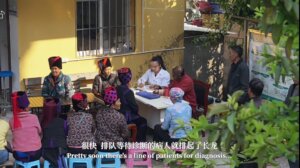
We extend our heartfelt blessings to Dr. Diarra, his family, and his students. May he continue to enjoy health, prosperity, and the fulfillment that comes from a life dedicated to healing. Medicine, at its best, is a universal language that speaks not of division, but of unity, compassion, and hope.
Contributed by: Dr. Musa Abubakar Tadda
Reference: WORLD PRACTICE OF TRADITIONAL CHINESE MEDICINE, Wosu International Communication Center, Jiangsu.

Leave A Comment
You must be logged in to post a comment.