

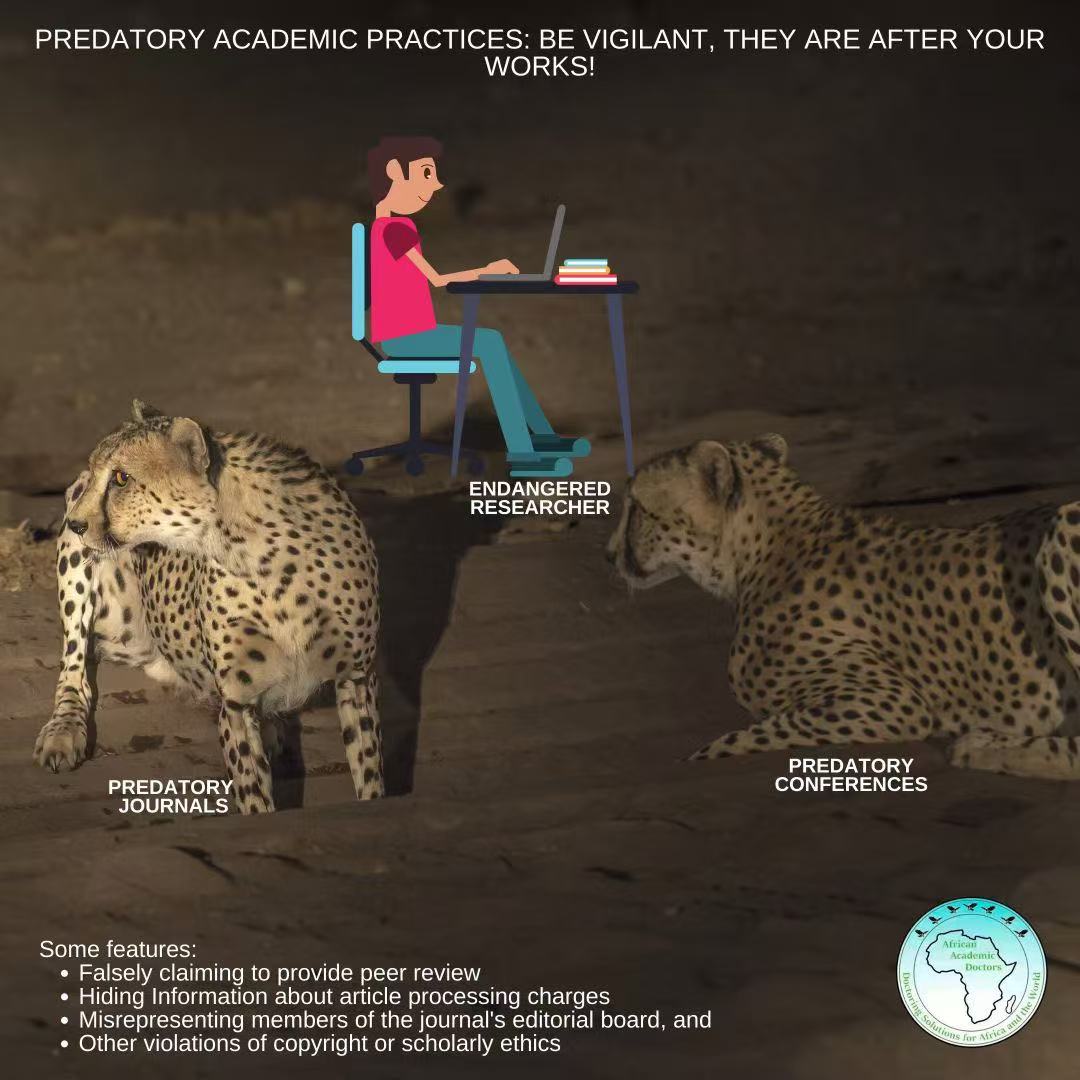
Predatory Academic Practices – Be Vigilant, They Are After Your Works!
July 2, 2025 @ 8:00 AM - 5:00 PM WAT
Predatory Academic Practices" refer to a range of unethical behaviors in the academic world that exploit researchers for financial gain or other benefits, often at the expense of academic integrity and quality.
Some examples include but not limited to the following.
Predatory Publishing
• Definition: Predatory publishing is a business model that prioritizes profit over academic value. Predatory publishers exploit the open-access model by charging authors high article processing charges (APCs) without providing the promised services, such as rigorous peer review.
• Common Characteristics:
• False or Misleading Information: They may claim to offer peer review services but do not actually conduct them. They may also list fake members of the editorial board or fabricate impact factors.
• Lack of Transparency: They do not disclose their publication processes, editorial board members, publication fees, or other important information.
• Aggressive Marketing: They often send out large volumes of spam emails inviting researchers to submit papers or join their editorial boards.
• Quick Publication: They promise to publish papers very quickly, usually without conducting thorough peer reviews.
• High Fees: They charge authors high APCs but do not provide high-quality publishing services in return.
• Out-of-Scope Papers: They accept and publish papers that are not related to the journal's stated scope.
• Harm: This practice not only undermines the quality and credibility of academic research but also has a negative impact on researchers' careers. For example, their research may not be recognized by the academic community, and their personal reputation may be damaged by association with predatory publishers.
Predatory Conferences
• Definition: Predatory conferences are academic meetings that are organized primarily for profit. They attract researchers with false claims and do not provide the promised academic experience.
• Common Characteristics:
• False Advertising: They may claim that the conference will be held in a well-known international location or that the organizers and participants are of high academic standing.
• Lack of Academic Rigor: They may not have a proper peer review process for paper submissions or may accept papers without proper evaluation.
• High Registration Fees: They charge high fees for conference registration but do not provide the expected academic benefits or networking opportunities.
• Poor Organization: The conferences may be poorly organized, with unclear schedules, inadequate facilities, and a lack of meaningful academic activities.
• Fake Proceedings: They may claim to publish conference proceedings in reputable journals or databases, but these claims are often false.
• Harm: Attending predatory conferences can waste researchers' time, money, and effort. It can also harm their academic reputation if they are associated with such conferences.
How to Avoid Predatory Academic Practices
• Research Thoroughly: Before submitting papers or registering for conferences, researchers should thoroughly investigate the publisher or conference organizer. Look for reviews, feedback from other researchers, and check the legitimacy of the organization.
• Check for Transparency: Ensure that the publisher or conference organizer is transparent about their processes, fees, and editorial or organizing committee members.
• Look for Peer Review: Verify that the journal or conference has a proper peer review process in place. This is a crucial aspect of maintaining academic quality.
• Be Wary of Aggressive Marketing: If you receive unsolicited emails with promises of quick publication or acceptance, be cautious. Legitimate publishers and conferences usually do not rely on spam emails for recruitment.
• Consult with Colleagues: Seek advice from experienced colleagues or mentors. They may have encountered similar situations and can provide valuable insights.
It's important for the academic community to be vigilant and to take steps to identify and avoid predatory academic practices. By doing so, we can help maintain the integrity and quality of academic research.


Leave A Comment
You must be logged in to post a comment.